Keeping your home clean in Oakville demands more than regular effort—it requires techniques adapted to Ontario winters, local humidity patterns, and the specific materials found in suburban homes. Many homeowners invest significant weekend time in cleaning, only to discover that well-intentioned methods actually damage surfaces, waste hours, or leave residues that worsen with each season.
The most costly cleaning mistakes in Oakville rarely stem from insufficient effort. Instead, they arise from using incompatible products on delicate surfaces, following an inefficient work sequence, or neglecting seasonal challenges like winter salt residue tracked through entryways. Fortunately, most of these errors correct easily once you understand the underlying problem and its local context.
This guide identifies five specific cleaning mistakes common in Oakville households, explains their real consequences for your time and property, and provides actionable corrections grounded in the realities of Canadian suburban living.
5 Common Cleaning Mistakes Oakville Homeowners Should Avoid
Réponse directe : The five most frequent cleaning errors in Oakville homes include using harsh products on incompatible surfaces, cleaning from bottom to top instead of the reverse, neglecting winter salt residue removal, allowing humidity buildup in kitchens and bathrooms, and skipping seasonal deep cleaning—each correctable with straightforward adjustments to your routine.
Mistake 1: Using the Wrong Product on the Wrong Surface
Many households reach for a single all-purpose cleaner for every surface, unaware that acidic formulations damage natural stone countertops while abrasive sprays scratch hardwood finishes. The problem intensifies when product labels use vague terms like “powerful” without specifying compatible materials.
The consequence extends beyond immediate streaking. Repeated use of incompatible cleaners degrades protective sealants on hardwood floors, dulls the finish on laminate surfaces, and etches marble or granite countertops—repairs that cost substantially more than the original cleaning product.
Correction: Match your cleaning product to the specific material. For hardwood floors, use pH-neutral cleaners designed for wood. Natural stone requires non-acidic formulations. Glass and mirrors benefit from ammonia-free sprays that prevent streaking. Always test a new product on an inconspicuous area before applying it broadly, and consult manufacturer guidelines for specialty surfaces installed during renovations.
Mistake 2: Cleaning from Bottom to Top
Starting with floors before addressing higher surfaces seems logical when dirt appears most visible underfoot. However, this sequence forces you to clean the same floor twice—once initially, then again after dust and debris fall from shelves, light fixtures, and windowsills during subsequent cleaning.
This mistake costs you tangible weekend time. A household following the bottom-up approach typically spends 30 to 40 percent more time on cleaning tasks compared to the top-down method, with no improvement in final cleanliness.
Correction: Begin every cleaning session at the highest point in each room—ceiling fans, upper shelves, light fixtures—and work systematically downward. Dust and vacuum floors last, capturing all debris that settled during the earlier stages. This single adjustment noticeably reduces total cleaning time while improving thoroughness. For residents interested in broader home improvement efficiencies, consider exploring DIY projects that complement a well-maintained interior.
Mistake 3: Neglecting Winter Salt Residue
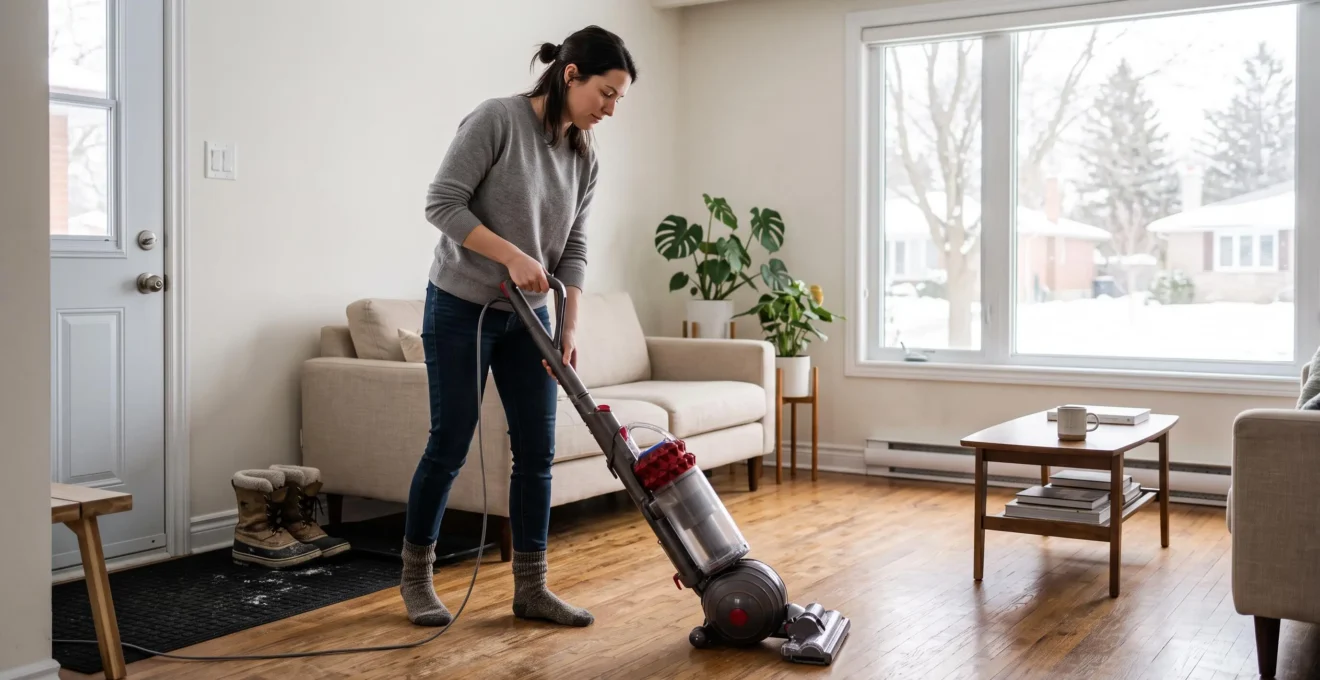
Oakville winters bring heavy snowfall and widespread road salt application. According to Environment and Climate Change Canada, approximately 5 million tonnes of road salts are spread on Canadian roads annually. This salt inevitably tracks into entryways on boots, pet paws, and winter gear, leaving white crusty residue on floors and carpets.
Ignoring this residue allows salt crystals to grind into hardwood finishes with each footstep, gradually wearing down protective coatings. Salt also absorbs moisture from the air, creating persistent damp spots that accelerate wood deterioration and attract additional dirt.
Correction: Keep winter salt and moisture from damaging your floors by placing heavy-duty mats on both sides of the main entrance. During the colder months, vacuum the entryway at least twice a week to remove loose salt before it becomes embedded in the flooring. For stubborn residue, use a damp microfibre mop with a solution of one part white vinegar to eight parts warm water, then dry the surface thoroughly to avoid moisture-related damage. After winter or renovation work, when dust and debris require more intensive cleaning, more informations about professional cleaning services can help bring your floors and living spaces back to a clean, fresh condition.
Mistake 4: Allowing Humidity Buildup in Kitchens and Bathrooms
Kitchens and bathrooms generate substantial moisture through cooking, showering, and daily water use. Without adequate ventilation, this humidity condenses on walls, grout lines, and concealed cabinet corners, creating ideal conditions for mould growth and persistent musty odours.
The health implications remain secondary to visible damage in most cases, but the combination of mould stains and deteriorating grout requires expensive remediation. Allowing humidity to accumulate unchecked can necessitate grout replacement or even drywall repairs within a few years.
Correction: Run exhaust fans during and for 15 minutes after cooking or showering. Wipe down tiled shower walls with a squeegee immediately after each use to remove standing water. Leave bathroom and shower doors open between uses to promote air circulation. Inspect grout lines monthly for early signs of discolouration, addressing any darkening promptly with a grout-safe cleaner and ensuring the area dries completely.
Mistake 5: Skipping Seasonal Deep Cleaning
Weekly surface cleaning maintains general tidiness but fails to address accumulated grime in overlooked areas—behind appliances, inside window tracks, beneath furniture, and along baseboards. Many Oakville households skip the traditional spring cleaning entirely, believing regular maintenance suffices.
Over time, dust buildup in HVAC vents reduces air quality and system efficiency. Grime accumulation in kitchen exhaust filters creates fire hazards. Neglected window tracks trap moisture and organic debris, inviting insects and accelerating frame deterioration.
Correction: Schedule two thorough deep cleaning sessions annually—one in spring after winter salt and humidity subside, and one in autumn before heating season begins. Focus on areas your weekly routine misses: pull out refrigerators and stoves to clean behind them, vacuum HVAC vents and baseboards, wash window tracks, and launder or vacuum curtains and upholstery. For extensive tasks like post-renovation cleaning or move-out preparation, a dedicated deep clean ensures nothing gets overlooked.
Why Do These Cleaning Mistakes Cost You Time and Money?
Understanding the real consequences of common cleaning errors helps prioritize which corrections deliver the greatest value for your limited weekend hours and household budget.
Financial Impact: Surface Damage and Replacement Costs
Using harsh cleaners on hardwood floors gradually strips protective polyurethane finishes, eventually requiring professional refinishing that costs several thousand dollars for an average Oakville home. Acidic products applied to natural stone countertops etch the surface permanently, necessitating professional re-polishing or replacement.
Winter salt residue left unaddressed wears through floor finishes near entryways within three to five years—a concentrated damage pattern that forces homeowners to refinish entire rooms even when only high-traffic zones show visible deterioration. The cost of prevention—quality entry mats and weekly vinegar cleaning—remains negligible compared to refinishing expenses.
Time Waste: Inefficient Methods and Repeated Work
Cleaning from bottom to top forces you to revisit the same surfaces multiple times as dust and debris continue falling. A typical weekend cleaning routine that should require two to three hours stretches to four or more when you repeat floor cleaning after dusting upper surfaces.
Skipping seasonal deep cleaning doesn’t save time—it merely defers work until accumulation becomes visible and requires more intensive effort. Grime that wipes away easily during routine maintenance hardens over months, demanding harsh scrubbing or specialized products that take substantially longer to apply.
Health and Comfort: Air Quality and Allergens
Humidity buildup in bathrooms and kitchens fosters mould growth that releases spores into your home’s air. While not immediately dangerous for most individuals, these spores contribute to respiratory irritation and exacerbate existing allergies—particularly relevant during Oakville’s humid spring and summer months when outdoor pollen already challenges indoor air quality.
Neglected HVAC vents and baseboards accumulate dust that recirculates throughout your home each time heating or cooling systems activate. Regular deep cleaning of these areas noticeably improves air freshness and reduces the dusty film that settles on furniture between cleanings.
How to Build an Efficient Cleaning Routine for Your Oakville Home
An effective cleaning routine adapts to your household size, dwelling type, and the seasonal challenges specific to Ontario’s climate. The goal centres on maintaining consistent cleanliness without sacrificing entire weekends to housework.
Weekly Routine: Core Tasks for Maintaining Cleanliness
Focus your weekly effort on high-impact tasks that prevent accumulation rather than attempting comprehensive cleaning every week. Prioritize vacuuming or sweeping all floors, cleaning kitchen counters and sinks, wiping bathroom fixtures, and removing visible clutter from main living areas.
For a typical Oakville single-family home, allocate approximately two hours weekly. Condos and apartments require less time due to smaller square footage—often 60 to 90 minutes suffices. Divide tasks across weekday evenings if weekend time remains scarce: quick kitchen cleaning after dinner, bathroom wipe-down before bed, floor vacuuming on a designated evening.
- Start high in each roomDust ceiling fans, light fixtures, and upper shelves first, allowing debris to fall.
- Progress to mid-level surfacesWipe countertops, tables, windowsills, and furniture at waist height.
- Finish with floorsVacuum or sweep, then mop hard surfaces, capturing all settled dust and debris.
- Address bathrooms and kitchen lastClean sinks, toilets, and tubs after completing dry dusting to prevent spreading moisture.
Seasonal Adjustments: Winter Salt, Spring Pollen, and Humidity
Oakville’s climate demands seasonal modifications to your baseline routine. Winter cleaning intensifies entryway maintenance—increase vacuuming frequency to three times weekly near exterior doors and add bi-weekly vinegar mopping to remove salt residue before it embeds.
Spring brings pollen that accumulates on windowsills and outdoor furniture brought inside. Schedule window track cleaning in late April or early May, and vacuum upholstered furniture thoroughly to remove embedded pollen. Summer humidity requires vigilance in bathrooms and basements: run dehumidifiers if needed and inspect grout monthly for early mould signs.
Autumn cleaning prepares your home for heating season. Clean HVAC vents and replace furnace filters before first use, vacuum behind radiators and baseboards, and wash curtains to remove accumulated summer dust that will otherwise circulate when heating begins.
Adapting Routine to Dwelling Type: House, Condo, or Apartment
Single-family homes face greater entryway exposure and typically include basements requiring separate attention. Prioritize entry-level floor protection with layered mats, and schedule basement inspections for humidity signs quarterly.
Condos and apartments benefit from reduced exterior exposure but often feature less ventilation. Increase exhaust fan usage during cooking and showering, and consider a small portable dehumidifier for bathrooms lacking windows. Shared HVAC systems reduce individual control—focus your effort on surface cleaning and humidity management within your unit.
Townhouses combine challenges: multiple entry points like single-family homes, but often with limited basement ventilation similar to condos. Address both winter salt at front and rear entries, and monitor basement humidity carefully during spring thaw when groundwater levels rise.
When Is It Worth Hiring a Professional Cleaning Service?
Most routine cleaning remains well within the capability of homeowners following correct methods. Certain situations, however, justify professional service based on scope, required equipment, or time constraints that exceed realistic weekend availability.
Post-Renovation Cleaning: Construction Dust and Debris
Renovation projects generate fine dust that penetrates every surface, drawer, and vent in affected areas and beyond. This dust differs from routine household dirt—it contains abrasive particles that scratch surfaces if wiped improperly, and it spreads through HVAC systems to rooms untouched by construction.
Professional post-renovation cleaning addresses this comprehensively: specialized vacuums with HEPA filters capture fine particles without redistributing them, methodical top-to-bottom sequencing prevents recontamination, and appropriate products remove construction residue without damaging newly installed finishes. The time required for thorough post-renovation cleaning often exceeds 12 hours for a moderate kitchen remodel—a realistic weekend commitment for most households.
Move-Out Cleaning: Lease Requirements and Time Pressure
Lease agreements typically require tenants to return rental units in original condition, excluding normal wear. Meeting this standard while coordinating moving logistics, packing, and transition to a new residence creates substantial time pressure during an already stressful period.
Professional move-out cleaning ensures landlord requirements are met systematically: baseboards, window tracks, appliance interiors, and cabinet shelves receive detailed attention that rushed DIY efforts often miss. This thoroughness protects damage deposits and prevents disputes—a pragmatic calculation when considering the value of your time during moving week.
Seasonal Deep Cleaning: Scope and Equipment
Comprehensive spring or autumn deep cleaning involves tasks that require specialized equipment many households lack: carpet extractors for thorough upholstery cleaning, extension poles for high windows and ceiling fans, appropriate solutions for diverse surface types throughout a home.
The decision to hire professional help for seasonal deep cleaning depends largely on your available time and physical capacity. A professional team completes a full-home deep clean in four to six hours with proper equipment. The equivalent DIY effort typically requires two full weekends—a reasonable trade-off if you value that time for family activities or other priorities.
- If you face post-renovation dust or move-out deadline pressure:Professional service likely justifies the expense through thoroughness and time savings during high-stress periods.
- If you need seasonal deep cleaning but lack equipment or time:Consider professional help for the bi-annual deep clean while maintaining weekly routines yourself.
- If you manage routine weekly cleaning comfortably:Continue handling maintenance yourself using the corrections outlined earlier, reserving professional service for exceptional situations.
Local Professional Options in Oakville
According to the company’s official communications, Sunrise Cleaning has served the Oakville area for over 20 years and reports being recognized as First Place Diamond winner of The Oakville Beaver’s Readers Selection Awards in the cleaning and maid services category for several years. The company indicates current rates starting from approximately 44.88 dollars per hour, with promotional offers communicated directly by the business and subject to specific terms and restrictions.
When evaluating any professional cleaning service, verify insurance coverage, request references from comparable local properties, and clarify exactly which tasks the quoted price includes. Professional cleaning remains a service purchase like any other—value depends on matching the provider’s strengths to your specific situation and needs.
Key Takeaways for a Cleaner, Healthier Home
Essential Corrections to Remember
- Match cleaning products to surface materials to prevent damage—pH-neutral for hardwood, non-acidic for natural stone, ammonia-free for glass.
- Always clean from top to bottom, finishing with floors to avoid repeating work as debris falls.
- Address winter salt residue promptly with vinegar solution and heavy-duty entry mats to protect floor finishes.
- Manage humidity actively in bathrooms and kitchens through ventilation and regular surface drying to prevent mould.
- Schedule seasonal deep cleaning twice yearly to address areas your weekly routine misses.
Effective home cleaning in Oakville requires adapting general best practices to local conditions—Ontario winters, suburban dwelling types, and the seasonal humidity patterns that distinguish Canadian homes from those in milder climates. The most impactful corrections involve changing method rather than increasing effort: proper product selection, top-down sequencing, and seasonal adjustments deliver better results in less time.
Recognizing when a task exceeds reasonable DIY scope represents practical judgment rather than failure. Post-renovation cleaning, move-out preparation under time pressure, and comprehensive seasonal deep cleaning often justify professional assistance based on objective criteria: required equipment, available time, and the risk of surface damage from improper technique.
What is the most common cleaning mistake that damages floors?
How often should a Canadian home receive deep cleaning?
Beyond maintaining surfaces and managing seasonal challenges, a well-organized home supports overall well-being through reduced stress and improved comfort. For residents considering broader improvements that complement effective cleaning routines, thoughtful interior decoration creates environments that feel both welcoming and easier to maintain throughout the year.